
Futurestone Constructions · 9 December 2025 · 5 min read
Civil construction is the part of a project that almost nobody photographs and everybody depends on. It covers the work from setting out through to the completed structural frame and the site works around it.
What civil work covers
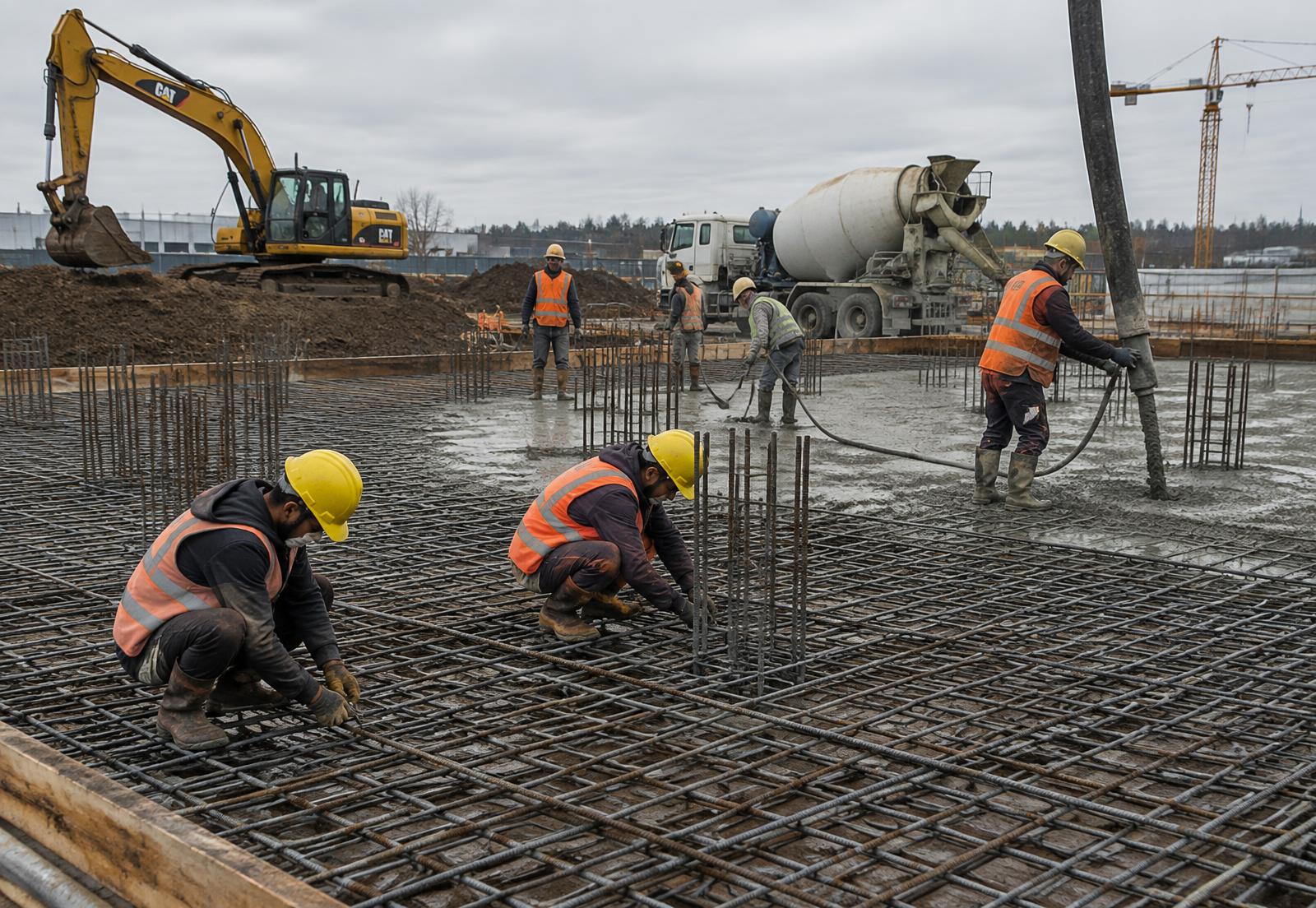
On a typical building project, civil works include survey and setting out, excavation, foundations, reinforced concrete structure, drainage, retaining structures and site development.
- Survey and setting out
- Excavation and earthwork
- Foundations — footings, rafts or piles
- RCC columns, beams and slabs
- Drainage and water management
- Retaining walls, boundary walls and paving
Why the early stages deserve the most attention
Almost everything in civil work becomes expensive or impossible to correct once the next stage is on top of it. A misplaced column is a design problem forever; insufficient cover on reinforcement becomes a corrosion problem years later.
This is why supervision should be concentrated at the start, even though it feels like the least visible part of the project.
What to check before a concrete pour
A short checklist catches most of the problems that matter, and all of it can be checked in the hour before concrete arrives.
- Bar diameter and spacing match the structural drawing
- Lap lengths and anchorage are as specified
- Cover blocks are in place on all faces
- Formwork is aligned, tight and properly propped
- Conduits and sleeves are placed before the pour, not cut in after
- A curing plan is agreed for the days following
Curing is not optional
Concrete gains most of its strength in the days after placement, and only if it stays wet. Curing that stops after a day or two produces a surface that looks finished and performs poorly.